


Last Updated: November 1, 2026
Quick Summary
The best baits for shore fishing beginners are frozen Tweed Bait IQF Pilchards, which are individually quick frozen so you thaw only what you need. Squid value packs and Hawkesbury Prawns are strong alternatives, and pairing baits with baitholder hooks keeps them secure in the surf.
- Tweed Bait IQF Pilchards are the top pick, since you can thaw only what you need.
- Tweed Bait Hawkesbury Prawns at 400g are the best budget option at $16.99.
- Squid is a versatile all-rounder that holds well on the hook.
- Use baitholder hooks and elastic bait thread to keep soft baits on in rough surf.
- Take two baits, one oily fish bait and one firm bait, to compare what fish prefer on the day.
Table of Contents
- 7 Best Baits for Shore Fishing Beginners: A Quick Ranked List
- Shore Fishing Setup for Beginners: What You Actually Need
- Choosing Bait by Target Species and Region
- How to Bait a Fishing Hook for Beach Fishing
- Best Bait for Beach Fishing: Cost, Availability and Storage Compared
- Beginner Decision Framework: Which Bait for Which Conditions
- Your Next Step: Stock Up Before Your First Session
- Frequently Asked Questions
Choosing the right bait is the fastest way to start catching fish from the beach, and it is where most beginners get stuck. Shore fishing rewards good bait choices more than expensive gear, and the seven options below cover the most reliable baits for Australian beaches and surf. This guide from Fergo's Tackle World ranks them for first-time anglers, explains how to rig them, and compares cost, availability and storage, so you can stock up with confidence before your first session.
7 Best Baits for Shore Fishing Beginners: A Quick Ranked List
Here is our ranked list of seven baits that work well for shore fishing beginners, from easiest to use to most specialised:
- Tweed Bait IQF Pilchards: Our top pick for beginners. Individually quick frozen, so you thaw only what you need.
- Tweed Bait Squid Value Packs: Squid is versatile and holds well on the hook, making it a reliable all-rounder.
- Tweed Bait Hawkesbury Prawns: Snap frozen and easy to rig, a good choice for estuary and beach fishing.
- Instinct Pro Series Baitholder Hooks: Not a bait, but essential for keeping soft baits secure in the surf.
- Cobalt Blue Bait Mate Elastic Thread: Keeps delicate baits such as pilchards and prawns firmly on the hook.
- Tec Tackle Star Sinkers: Anchors your bait in sandy gutters so it stays put longer.
- iCatch Squidder Float: Keeps your bait in the strike zone when fishing off the sand.
Quick Picks:
- Best Overall: Tweed Bait IQF Pilchards, for versatility and easy storage
- Best Budget Option: Tweed Bait Hawkesbury Prawns at the 400g size
- Best for Bigger Fish: Tweed Bait Squid Value Packs
Shore Fishing Setup for Beginners: What You Actually Need
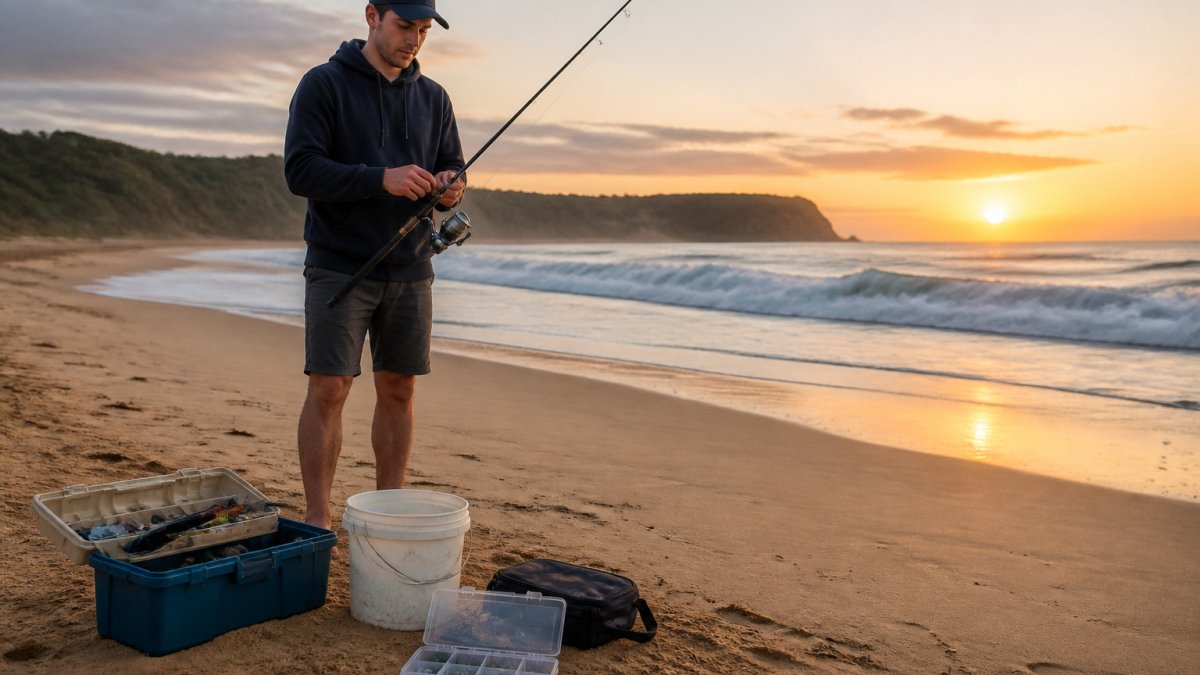
You do not need an expensive setup to start. A basic rod, a reel, a leader, and a small selection of hooks, sinkers and bait will cover most beach sessions. The most common beginner mistake is buying too much gear before learning how the surf behaves.
Keep your tackle box light so you can move along the sand and reach the gutters where fish feed. A purpose-built Jackson Ocean Gate Shore Jig Rods is a good next purchase for this kind of mobile shore fishing.
Choosing Bait by Target Species and Region
Bait choice should start with the fish you expect to meet, not with what happens to be in the freezer. The table below maps the seven baits in this guide to the shore and estuary species beginners most commonly target, with a suggested hook size and presentation for each. Treat it as a starting point and confirm local rules and size limits before you fish.
| Target species | Best bait from this list | Hook size (approx.) | Presentation |
|---|---|---|---|
| Bream | Hawkesbury Prawns, small squid strips | Size 1 to 1/0 baitholder | Whole prawn threaded once through the tail; squid strip no longer than 3 cm |
| Flathead | Prawns, pilchards | 1/0 to 3/0 baitholder or long shank | Whole pilchard on a single hook or a two-hook rig; prawn tail-first |
| Whiting | Hawkesbury Prawns, squid strips | Size 2 to 1/0 long shank | Small, lively presentation; keep the bait narrow |
| Tailor | Pilchards, squid | 3/0 to 5/0 baitholder | Whole or half pilchard, secured with bait thread |
| Salmon | Pilchards, prawns | 2/0 to 4/0 baitholder | Whole pilchard or prawn cluster, cast into the gutter |
| Snapper (from rocks or deep beach) | Squid, pilchards | 4/0 to 6/0 baitholder or circle | Squid head or whole pilchard on a running sinker rig |
| Mulloway | Squid, whole pilchard | 5/0 to 7/0 circle or baitholder | Large whole bait, lightly weighted, fished in a gutter or hole |
Adapting to your region. Bait availability and fish behaviour shift with latitude and water temperature. In cooler southern waters, squid and pilchards tend to be the workhorses, while prawns and smaller strips do more of the work in warmer northern estuaries. Rather than guessing, do three things before your first session:
- Check the local fishing rules for your state or territory, including size and bag limits and any bait restrictions in marine parks.
- Ask at the nearest tackle shop what has been biting and which bait is selling fastest that week.
- Match your bait size to the hook and the fish: small baits for bream and whiting, larger whole baits for tailor, salmon and mulloway.
Natural bait versus artificial lures. Many beginners start with natural bait because it is familiar and forgiving while they learn to read the water. Soft plastics and metal lures become more effective once you can read the surf and cast accurately, but starting with fresh or frozen natural bait keeps your first sessions simpler and cheaper.
How to Bait a Fishing Hook for Beach Fishing
Getting bait onto a hook is easy; keeping it there through a cast and in the surf is the skill. This section covers hook choice, presentation for each of the seven baits, and the rigs that hold bait in the strike zone.
Choose the hook before the bait
Match the hook to the bait and the target fish. A hook that is too large leaves the point exposed and spooks fish; one that is too small cannot hold a whole pilchard. As a rule of thumb:
- Prawns and small strips: size 1 to 1/0 baitholder or long shank.
- Pilchards and squid strips: 2/0 to 4/0 baitholder.
- Whole squid and large whole baits: 4/0 to 7/0 circle or baitholder.
Baitholder hooks have barbs that help grip soft baits.
Presentation by bait
- Pilchards (whole): Pass the hook through the baitfish's eye socket or just behind the head, then out through the back. Browse the Shinto Pro Live Bait Long Shank Hook Bulk Pack for a long shank option that suits this presentation. This keeps the bait straight and stops it spinning on the cast. Secure the tail with bait thread if the surf is up.
- Pilchards (half or fillet): Thread the hook once through the thick end, then once through the thin end so the bait sits flat against the shank.
- Squid strips: Thread the strip onto the hook like a ribbon, pushing the point through the strip two or three times so it bunches on the shank. Squid is tough, so it stays on through repeated casts.
- Whole squid (small): Run the hook through the mantle and out near the tail, leaving the tentacles trailing as an attractor.
- Prawns: Thread the hook through the tail and out the back, keeping the head intact. A whole prawn on a long shank presents naturally and stays lively in the current.
- Soft plastics and scented lures: Rig weedless or on a jighead so the hook point sits flush with the body; this is the one presentation where the hook is deliberately hidden.
Rigs that keep bait in the strike zone
- Running sinker rig: A star sinker above a swivel, then a leader to the hook. This is the simplest beginner rig and lets the bait move naturally while the sinker holds bottom in a gutter.
- Paternoster rig: A sinker on a dropper below one or two hooks. Useful when you want two baits in the water or when the current is pushing a running rig around.
- Float rig: An iCatch Squidder Float above the bait keeps prawns and small strips off the bottom and in the strike zone when fishing off the sand into deeper water.
Troubleshooting in the surf
- Bait sliding down the shank: Wrap with elastic bait thread or switch to a baitholder hook.
- Bait tearing off on the cast: Use a softer cast, shorten the bait, or add a bait stop.
- Bait washed out of the gutter: Increase sinker weight or switch to a paternoster rig.
- No bites but bait gone: Downsize the hook and bait; small pickers may be stripping it.
Best Bait for Beach Fishing: Cost, Availability and Storage Compared
| Bait | Starting Price | Storage | Best For |
|---|---|---|---|
| Tweed Bait IQF Pilchards (400g) | $6.99 | Freezer, pack-by-pack | Beginners and beach species |
| Tweed Bait Squid Value Pack | $10.99 | Freezer, vacuum-sealed | Reef and offshore fish |
| Tweed Bait Hawkesbury Prawns (400g) | $16.99 | Freezer | Estuary and beach fishing |
Frozen baits give you flexibility. Tweed Bait IQF Pilchards are frozen separately, so you can take out one or two at a time and return the rest to the freezer. You can buy frozen pilchards in individually quick frozen packs.

Beginner Decision Framework: Which Bait for Which Conditions
Use this simple approach when you are unsure what to take:
- Calm, clear beach: Pilchards or prawns, rigged on a baitholder hook.
- Rough surf: Add elastic bait thread and a star sinker to hold bait in the gutter.
- Estuary or sheltered bay: Prawns or squid, lighter sinkers, shorter casts.
- Targeting bigger fish: Squid or pilchards, with a stronger hook such as the Mustad Big Gun.
If you are still unsure, take two baits and a few spare hooks. Most beginners learn more from a single session on the beach than from any amount of reading.
Your Next Step: Stock Up Before Your First Session
Start with one or two frozen baits, a baitholder hook pack, and a spool of bait thread. Add a star sinker and a float once you have a feel for the water. Our team at Fergo's Tackle World can help you choose the right combination for your local beach, so visit one of our stores or shop online and get your gear ready before your next trip.
Frequently Asked Questions
What is the best bait for fishing from shore?
For most beginners, frozen pilchards are the easiest starting bait for shore fishing. They are oily, widely accepted by estuary and surf species, and they hold a scent well in the water. Tweed Bait IQF Pilchards are available in 400g, 1kg and 2kg packs, with the product listed from $6.99. Pair them with a baitholder hook in a size that suits the bait and you have a dependable setup for most beaches.
Which bait is easiest for beginners to use from the shore?
Frozen squid and pilchards are generally the simplest. Both stay on the hook reasonably well, do not require live handling, and work across several common species. Pre-cut and individually frozen baits also reduce waste, since you thaw only what you need. Adding a small amount of elastic bait thread, such as the Cobalt Blue Bait Mate Elastic Bait Thread at $3.99, helps keep softer baits firmly in place when the surf is rough.
How do you keep bait on a hook when beach fishing?
Use a baitholder hook with barbs or a turned-in eyelet, then secure the bait with elastic bait thread. Wrap the thread around the bait and the shank a few times so it does not slide off on the cast. Softer baits such as prawns benefit most from thread. Check the bait after every few casts, especially in surf, and rebait if the hook is bare or the bait has shifted.
Should beginners use bait or lures for shore fishing?
Many beginners choose bait for their first sessions because it is familiar and simple to use while they learn to read the water. Lures are useful later for targeting specific species, but they require more casting skill and retrieve technique. Starting with a bait such as pilchards, squid or prawns builds a foundation you can build on.


