


Quick Summary
The best fishing rod for estuary fishing depends on your target species, your method and your budget. A light spinning rod around 6'8" to 7 feet, rated 2-4kg or 2-6kg, suits most estuary work, and beginners do well with a matched rod and reel combo.
- Rods around 6'8" to 7 feet suit most estuary work, balancing casting distance with control.
- Rods rated 2-4kg or 2-6kg cover most estuary species without being overpowered.
- Lure anglers should choose a light spinning rod with a crisp action for soft plastics.
- Bait anglers should choose a slightly firmer, more moderate action rod that casts heavier rigs.
- The Shimano Sienna 7' Estuary Combo at $99.00 is a practical starting point for bait and lure work.
Table of Contents
- Quick Comparison: Best Estuary Rods at a Glance
- How We Evaluated These Estuary Rods
- Best Rod for Estuary Lure Fishing
- Best Estuary Rod and Reel Combos for Beginners
- Best Rod for Bream and Flathead
- Estuary Bait Fishing Rod and Reel Setups
- Choosing Your Estuary Rod: Next Steps at Fergo's Tackle World
- Frequently Asked Questions
Quick Comparison: Best Estuary Rods at a Glance
Last Updated: November 4, 2026
Choosing the best fishing rod for estuary fishing comes down to three things: the species you're chasing, how you plan to fish, and what you're willing to spend. This comparison covers the estuary-ready rods and combos we stock, so you can see how each one lines up before you read the detail below.
Quick Picks:
- Best Budget Option: Shimano Zentra Spin Rods at $79.99, an affordable all-round light-tackle rod for general estuary work.
- Best Value Combo: Daiwa Crossfire 702LFS 2-6kg Spin Combo at $119.99, which bundles a rod and reel for bait, soft plastics and hard-body lures.
- Best for Travel: Samaki Drifter Travel Rods at $239.00, a 7-piece rod built for estuary and freshwater trips.
| Rod or Combo | Price (AUD) | Type | Best For | Key Feature |
|---|---|---|---|---|
| Shimano Zentra Spin Rod | $79.99 | Rod | General estuary and inshore fishing | Light-tackle, soft-plastic friendly |
| Crucis Tempesta VXS Spin Rod | $89.00 | Rod | Value-focused anglers | Carbon graphite blank, Fuji guides |
| Shimano Sienna 7' Estuary Combo | $99.00 | Combo | Beginners, bait and lure work | 2-piece rod, 10-year reel warranty |
| Shimano Izalus Spin Rod | $99.99 | Rod | Versatile estuary to beach use | 24 Ton graphite, Fuji K guides |
| Daiwa Crossfire 702LFS Combo | $119.99 | Combo | Entry-level all-rounder | Rod and reel in one package |
| Shimano Sakana IV Rod | $249.00 | Rod | Soft plastics, topwater, crankbaits | Premium Fuji Alconite K guides |
| Shimano Symetre 6'8" Light Combo | $175.00 | Combo | Light lure and bait fishing | Includes 3 free soft plastic packs |
| Azusa Spinning Rod | $239.00 | Rod | Custom-fitted anglers | Custom butt lengths, woven graphite |
| Miller Road Crew Finesser Travel Rod | $549.00 | Rod | Finesse fishing and travel | 5-piece, 7'5" multi-section |
Prices are the listed prices at Fergo's Tackle World at the time of writing. Read on for how each option was judged and who it suits best.
How We Evaluated These Estuary Rods
Each rod can be judged against the questions estuary anglers ask most often. Length, power rating and action all affect how a rod casts and how it handles a fish, so those are worth checking first. Build is next: blank material, guides and grip. Price comes last, measured against what each rod does well.
Rod length matters more than most beginners expect. A rod of around 6'8" to 7 feet suits most estuary work, because it casts light lures a useful distance and still gives you control over bream and whiting. Line-weight rating tells you the range of line the rod is designed for. Rods rated around 2-4kg or 2-6kg cover most estuary species without being overpowered.
It also helps to check what each rod is built for. A light, sensitive rod suits soft plastics. A slightly firmer rod handles heavier lures and bait rigs better.
Best Rod for Estuary Lure Fishing
If lure casting is your main method, a light spinning rod with a crisp action gives you the most feel and control. The Shimano Sakana IV Rods at $249.00 are designed for versatile estuary and inshore fishing and suit soft plastics, topwater and crankbait techniques. They use premium Fuji Alconite K guides and high-quality EVA grips.
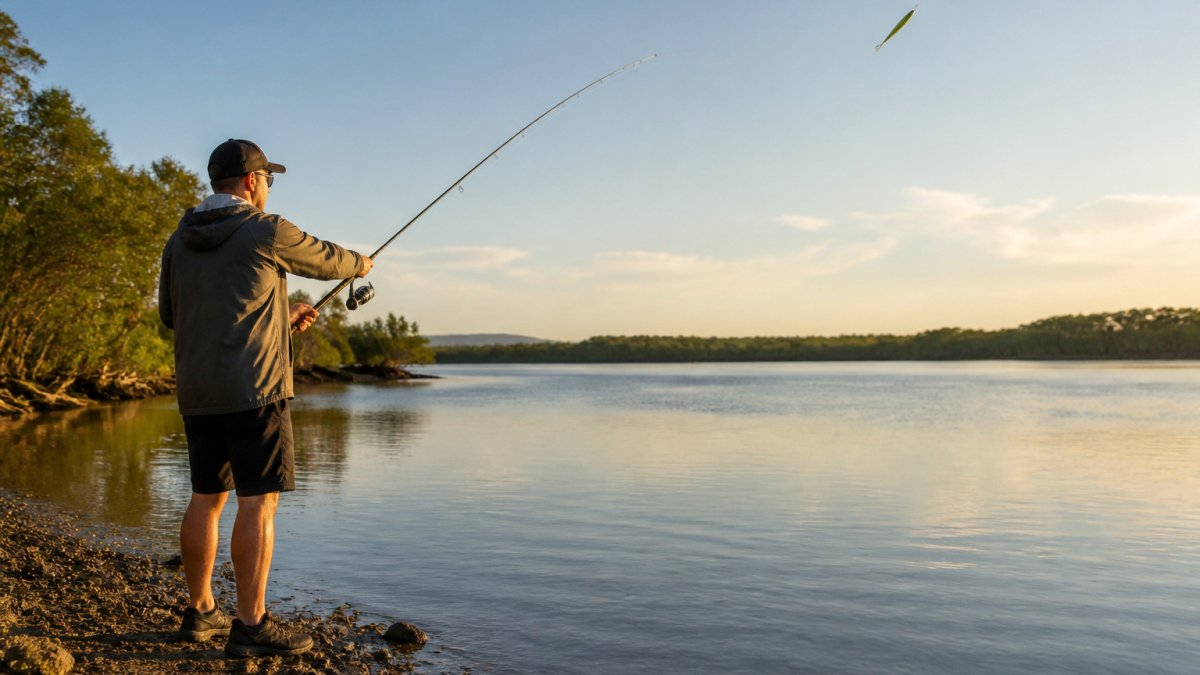
For a lighter budget, the Crucis Tempesta VXS Spin Rods at $89.00 offer a carbon graphite blank that is stiff enough to throw lures without being too stiff for bait. Their range covers most fishing styles, so you can match the rod to your target.
Best for: anglers who fish soft plastics and hard-body lures on estuary edges and flats. Skip if: you mainly fish heavy bait rigs in strong current, where a firmer rod will serve you better.
Best Estuary Rod and Reel Combos for Beginners
If you are new to fishing, a rod and reel combo removes the guesswork. You get a matched setup, which makes it easier to get started without buying parts that don't work together.
The Shimano Sienna 7' Estuary Combo at $99.00 pairs a 7-foot, 2-4kg graphite rod with a Sienna 2500 reel, and the reel carries a 10-year warranty. It is suited to bait and lure work in estuaries and freshwater.

The Daiwa Crossfire 702LFS 2-6kg Spin Combo at $119.99 is aimed at entry-level and budget-conscious anglers. It can be used for bait, soft plastics and hard-body lures, and it covers species from whiting through to larger flathead.
Watch out: check the line-weight rating on any combo before you buy. A rod rated 2-4kg will struggle with heavier line, so match your line to the rating on the rod.
Best Rod for Bream and Flathead
Bream and flathead are often lumped together, but they pull in different directions, and the rod that suits one is not automatically the best for the other. Getting this right is where most generic estuary advice falls short.
Flathead are ambush predators that lie on sand and mud flats and hit lures aggressively. They have a harder mouth and a habit of shaking their head, and bigger fish will run. A rod with a little more backbone and a slightly more moderate action helps here: it absorbs the headshake, keeps the hook pinned, and gives you the leverage to steer a fish away from the boat or the bank. A 2-4kg or 2-6kg rating with a fast-to-moderate action covers most flathead work, and the extra power is useful when a fish takes a soft plastic on the drop and runs.
The Shimano Izalus Spin Rod at $99.99 is built with 24 Ton graphite construction and Fuji K O-ring guides for lightweight performance.
Watch out: do not buy a heavy rod for bream because you also want to chase flathead. A rod rated above 2-6kg will cast small plastics poorly and dull the bite detection that bream fishing depends on. Match the rod to the fish you chase most, not the biggest fish you might hook.
Best for: anglers targeting bream around structure with soft plastics and small hard-bodies, and flathead on flats with slightly heavier lures. Skip if: you fish only open water for flathead and never cast at structure, where a longer, softer rod is more comfortable.
Estuary Bait Fishing Rod and Reel Setups
Bait fishing asks something different of a rod than lure fishing does. You are casting a rig with a sinker and a bait, often sitting it on the bottom and waiting, and you need a rod that loads smoothly under weight, casts without cracking off the bait, and shows you a bite before the fish swallows it. That usually means a slightly softer, more moderate action than a dedicated soft-plastic rod, and a rating that matches the sinker and bait you plan to use.
A common estuary bait setup is a 7-foot rod rated around 2-4kg or 2-6kg, paired with a 2500-size spinning reel. The 7-foot length gives you casting distance from the bank and enough reach to lift a fish up a rock wall or over an oyster lease. The 2500 reel balances the rod, holds enough line for a running fish, and has a drag range that suits light estuary work. If you fish heavier current or bigger baits, a 2-6kg rod with a 3000-size reel is the usual step up, but it is more rod than most estuary bait fishing needs.
The Shimano Sienna 7' Estuary Combo at $99.00 is the practical starting point here. It pairs a 7-foot, 2-4kg graphite rod with a Sienna 2500 reel, and the reel carries a 10-year warranty. That rating handles a running sinker rig with a small sinker and a prawn or strip bait, and it still casts a lightly weighted bait without folding. The Daiwa Crossfire 702LFS 2-6kg Spin Combo at $119.99 has a 2-6kg line rating.
Rigging matters as much as the rod. A simple running sinker rig, with the sinker above a swivel and a leader down to the hook, lets a fish take line without feeling the weight, and it suits the moderate-action rods above. Keep the sinker weight inside the rod's casting range: a rod rated 2-4kg will cast a small running sinker comfortably, but a heavy sinker will overload the tip and cost you distance and accuracy. Check the line capacity on your reel before you spool up, and match the leader to the structure you fish rather than to the rod's maximum rating.
Watch out: a bait rod and a lure rod are not always interchangeable. A fast, crisp lure rod will cast a soft plastic beautifully but can crack off a heavy bait rig, while a softer bait rod will feel vague with small plastics. If you do both, choose the rod for the method you use most and accept the compromise on the other.
Best for: anglers fishing prawns, strips and live baits on a running sinker rig from the bank, a boat or a rock wall. Skip if: you fish lures almost exclusively, where a faster-action lure rod will serve you better.
Choosing Your Estuary Rod: Next Steps at Fergo's Tackle World
Start by deciding what you will mostly catch and how you will fish. Lure anglers should look at light spinning rods with a crisp action. Bait anglers should look at slightly firmer rods that cast heavier rigs. Beginners will get the most value from a matched combo.
Visit our online store or one of our stores in Wollongong or Taren Point. Our team can talk through your options and help you match a rod to your target species and budget. We price match any Australian-based retailer, so you can buy with confidence.
Frequently Asked Questions
What is the best rod length for estuary fishing?
Most estuary anglers settle on a rod around 6'8" to 7'0" (roughly 2.0 to 2.1 metres). This length gives enough reach for casting lures and baits from the bank without being awkward to handle in tight spots. Shorter rods around 6'0" suit small creeks and confined structure, while longer rods help with distance on open flats. Shimano Sienna 7' and Daiwa Crossfire 702LFS are both 7' options, while the Shimano Symetre is 6'8".
What rod action is best for estuary fishing?
A fast or light action tip suits most estuary work because it lets you feel light bites and load the rod well for casting small lures. Many rods in this range, such as the Daiwa Crossfire 702LFS (light action, fast taper), are built this way. If you mostly fish baits, a slightly softer tip helps absorb the lunge of a bream or whiting when it takes a bait. Choose based on whether lure casting or bait fishing dominates your trips.
Can I use the same rod for bait fishing and soft plastics?
Yes. A light to medium spinning rod in the 2-4kg or 2-6kg range handles both bait and soft plastics for bream, whiting and flathead. The Shimano Sienna 7' 2-4kg and Daiwa Crossfire 702LFS 2-6kg are both built for this kind of versatile use.


